18 November 2026 · Momentum
The Gert Snel sales team uses AI to draw insights from the data of 2,000+ clients
It builds taste profiles, matches them to current stock and prepares messages. This lets the sales team make personalised offers at scale.
Get in touch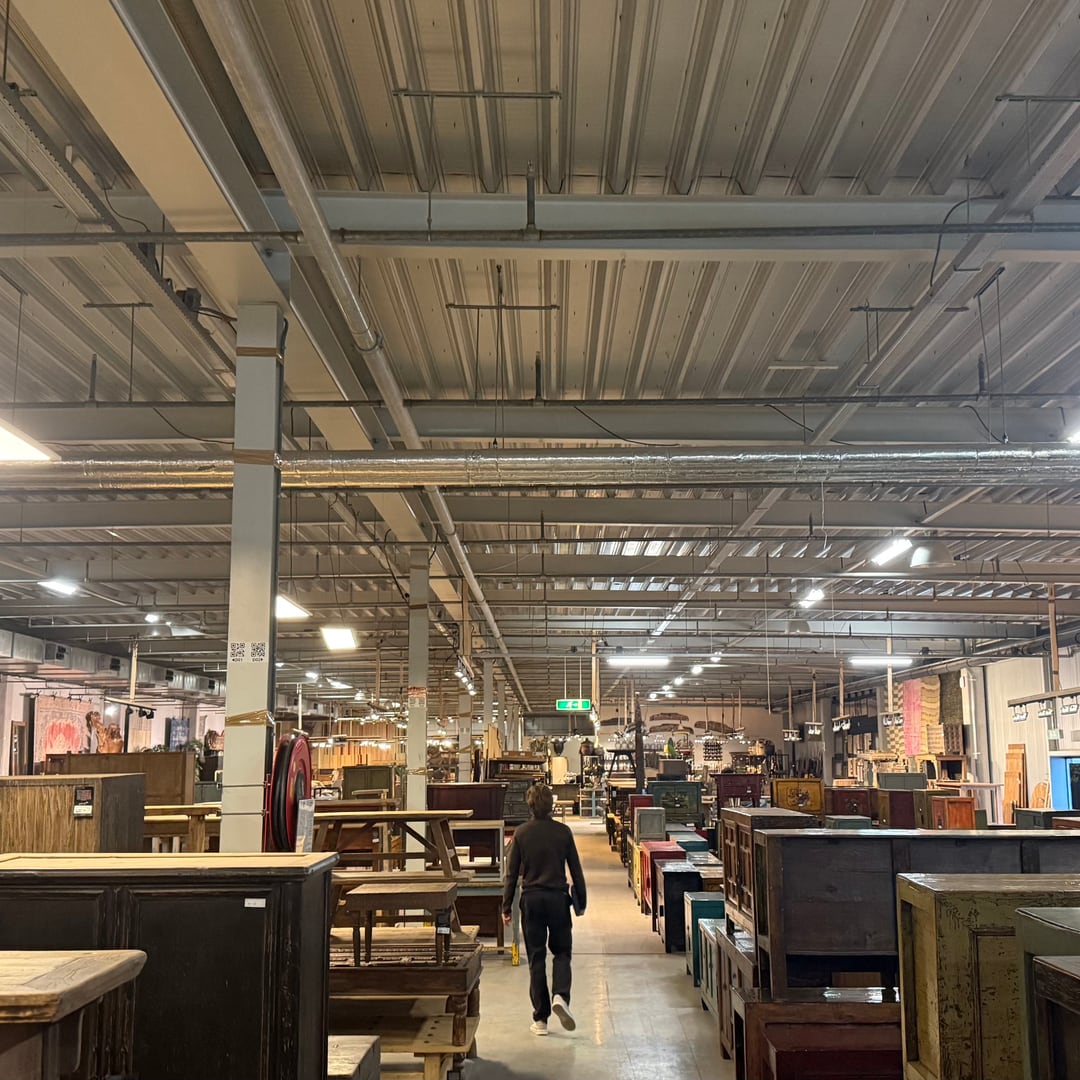
- Company size: SMB
- Region: The Netherlands, customers across Europe
- Industry: Wholesale, furniture and interiors
- Products: Sales app with AI matching, connected to Exact
customers with their own taste profile, based on ten years of purchase history
order lines and 47,000 products, going back to 2017, form the basis of the matching
customers are ready every morning per salesperson, with a proposal from current stock
This project is now in the pilot phase. The results will follow.
The opportunity: unique stock, a lot of time lost entering orders, little time to call.
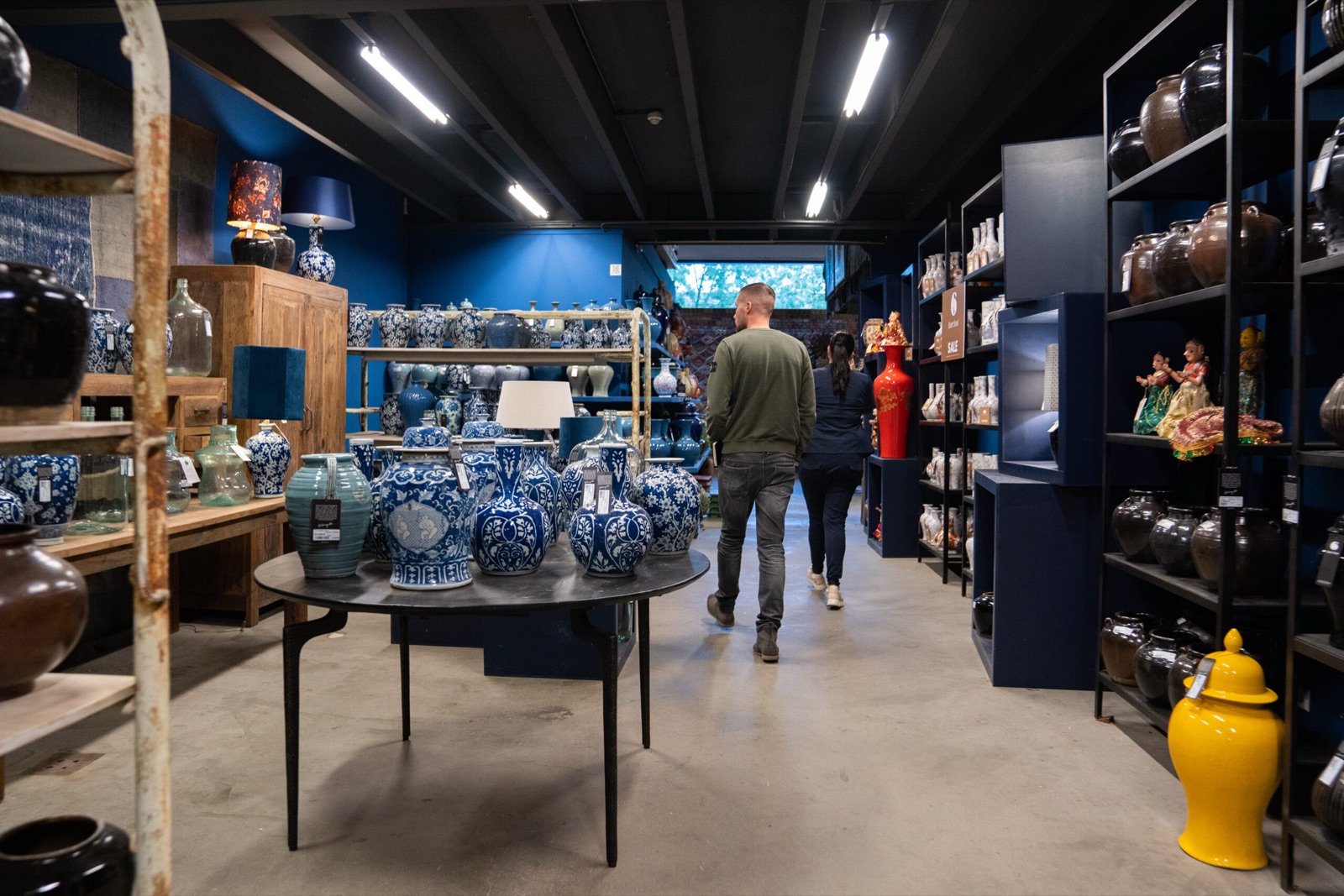
Gert Snel has supplied retail, hospitality and interior designers for more than 50 years. Every day, containers arrive with pieces that are often one-offs. This is what was going on:
- Unique stock: a new piece has no sales history. So you cannot see who bought something similar before.
- Knowledge in people's heads: salespeople know who buys what. If someone drops out, their customer knowledge goes with them.
- Little time for new sales: 70 to 80% of sales time went to order handling and aftercare.
- Scattered data: order history in Exact Globe, delivered orders as PDF, a new data hub that is still being built.
The solution: a data-driven sales process
We did not start with a tool, but with the question of where the revenue is. The general manager's answer was clear: the salespeople need to approach more customers, with the right piece at the right moment. AI does the analysis and makes the matches, the salesperson presses send. This is what we did:
1. Loading and cleaning the data. We pulled the full purchase history of more than 2,000 customers from Exact: 300,000 order lines and 47,000 products. That data was not directly usable, so first we cleaned it up to create a reliable foundation.
2. Analyzing and recognizing patterns. Which customer buys what, in which category, in which price range and how often.
3. Checking the patterns with the people. We put the patterns to the general manager and the salespeople. Do they recognize what the data shows?
4. Building taste profiles. For each customer a profile of the style they often buy, based on their purchases and the photos of those products.
5. Testing the profiles. The profiles went back to the people who know the customers. The pilot shows that a large share of the taste profiles are right.
6. The first working version. On 27 October the sales app was live: a daily call list per salesperson, proposals via Outlook and booking orders from email.
Only once the data and the matching were right did we start building out. That is also where the strength lies: almost ten years of order data that no human can oversee, and AI that goes through it again every night. That way the app knows more about each customer than a salesperson could ever remember.
The sales app
The app works while the company sleeps. Every night an AI model re-reads the order history of all customers. That keeps everything up to date and new customers and orders are included right away. The AI model turns product photos into vectors and matches the description that fits best. That way the app sees which style a customer often buys, even for a piece that is unique. Around five in the morning, 20 customers are ready for each salesperson.
Those 20 are a deliberate mix: customers who bought this year, customers from 1 to 2 years ago, and customers who have been quiet for longer. That keeps the regular customer warm and brings the dormant customer back into view. The timing is not random either. The data shows there are better moments to propose a certain product to a certain customer, and the app takes that into account.
The salesperson opens a customer and sees recent purchases and the style the app recognizes. By swiping, they fill a basket. They choose the language, the app writes an email, and it opens in Outlook with a PDF of the selection.
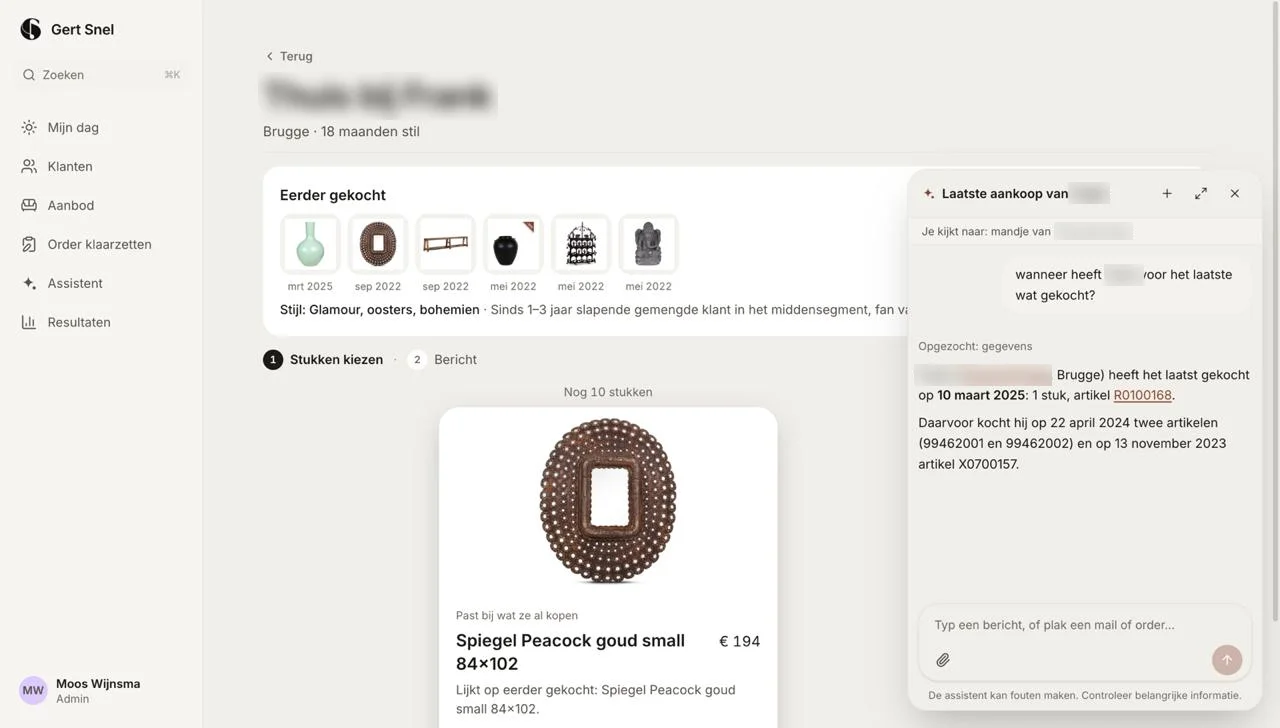
Booking orders in seconds. This is where almost all of the salespeople's time used to go. When a customer replies with an order, the salesperson copies that email and pastes it into the app. The app pulls out the items and quantities and puts the order straight into Exact. No more looking up and retyping item numbers.
- Connected to Exact: order history, items and stock come straight from Exact. Exact stays leading.
- The human decides: the app sends nothing on its own. The salesperson chooses the pieces, adjusts the email and presses send.
- Learns from the salespeople: sent emails are saved, so the texts sound more and more like the salespeople themselves.
- Grows with the customer: the system keeps learning from new data. Recent purchases weigh more heavily in the profile than purchases from years ago, because taste changes.
The impact: the sales team has time again for what matters, with a data-driven focus: messaging customers.
The gain comes from two sides. On one side, work without added value takes far less time: booking orders becomes pasting and checking instead of retyping. On the other side, the time that frees up goes to where the revenue is. The app decides who is next today and what is in stock for that customer, so salespeople really have the capacity to approach customers.
The goal for the team is 40 good proposals a day. We will add what this delivers as soon as we have that data.